

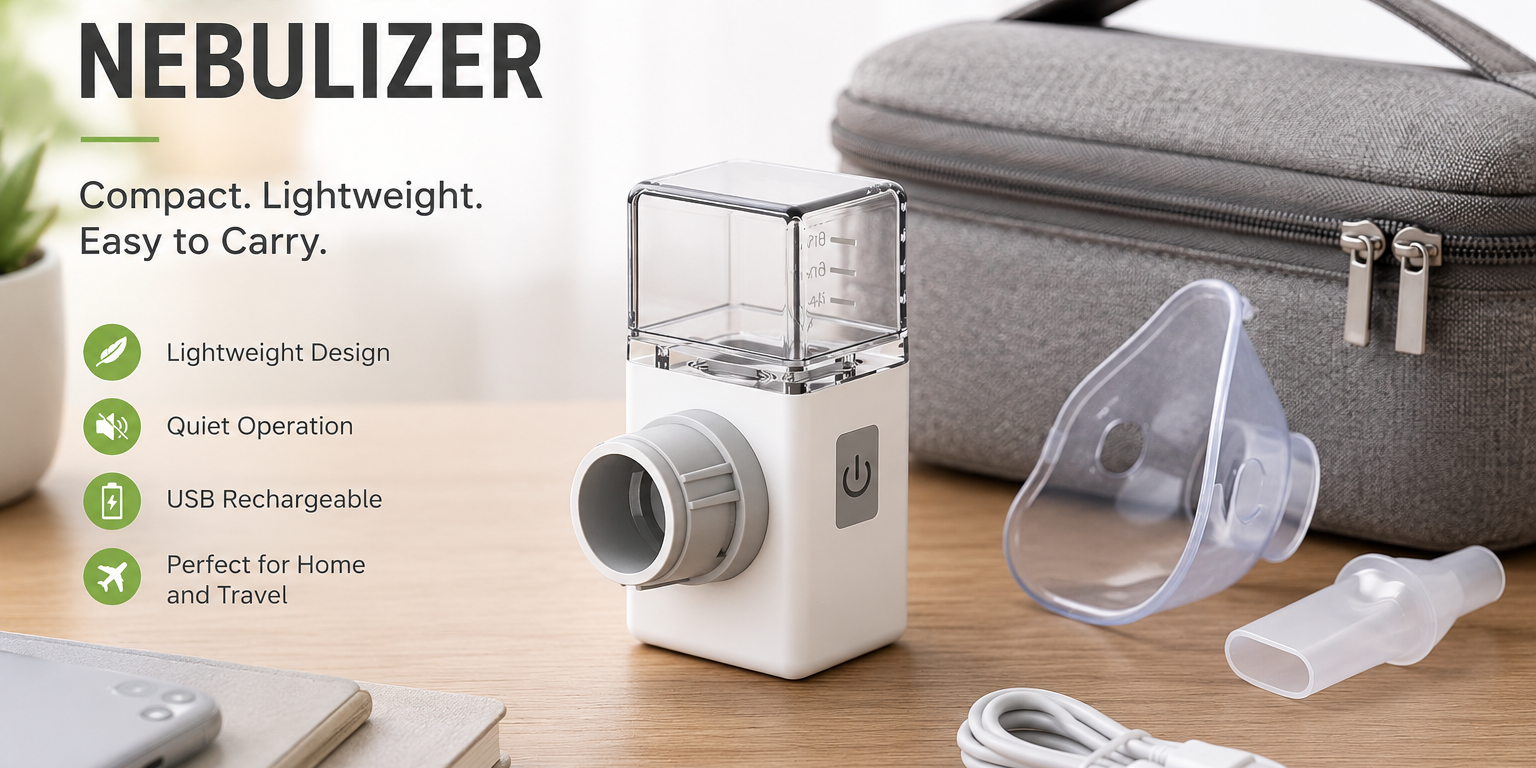
As home healthcare continues to become more convenient and accessible, portable nebulizers are gaining attention among families, caregivers, and healthcare product distributors. Compared with traditional nebulizers, portable models are designed to provide greater flexibility for everyday use, whether at home or while traveling.
But what makes a portable nebulizer truly convenient? Beyond its size, several factors can affect the overall user experience, including weight, noise level, power options, accessories, and ease of maintenance.
1. Compact Size for Everyday Use
One of the main advantages of a portable nebulizer is its compact design.
A smaller device is easier to store at home and more convenient to carry in a handbag, backpack, or travel case. For users who may need respiratory care equipment in different locations, portability can make everyday routines much easier.
For product brands and distributors, compact designs are also becoming an important consideration when developing home respiratory care product lines.
2. Lightweight Design Makes a Difference
Size and weight are especially important when a nebulizer is intended for travel.
A lightweight nebulizer can be easier to carry and handle, particularly for children, older adults, and caregivers. Some mini nebulizer models are designed to be extremely lightweight while still providing a practical solution for home and travel use.
For example, modern portable designs can be small enough to fit easily into a personal bag without taking up much space.
3. Quiet Operation for a More Comfortable Experience
Noise is another factor that can influence how comfortable a nebulizer is to use.
Traditional compressor nebulizers generally use a compressor and air flow system, which can produce noticeable operating noise. Mesh nebulizers, on the other hand, are known for their relatively quiet operation.
A quieter device can be particularly convenient in situations where users prefer a more peaceful environment, such as at home, during travel, or when caring for children.
However, noise level is only one factor to consider. The most suitable nebulizer depends on the user’s specific needs and the design of the product.
4. Convenient Charging and Power Options
Flexible power options can make a portable nebulizer much easier to use outside the home.
Many modern portable nebulizers support rechargeable batteries and USB charging. USB Type-C charging is also becoming increasingly common in portable healthcare devices because of its convenience and compatibility with widely available charging equipment.
A rechargeable nebulizer can reduce the need to stay close to a wall outlet and can be especially useful when traveling.
When evaluating a portable nebulizer, users and buyers may therefore want to consider:
- Battery capacity
- Charging method
- Charging time
- Operating time
- Whether the device can be used in different environments
5. Different Accessories for Different Users
A convenient nebulizer should also provide accessories that support different usage needs.
Common accessories may include:
- Adult mask
- Child mask
- Mouthpiece
- Medication cup
- Air tube, depending on the device design
Adult and child masks can provide different options for family use, while a mouthpiece may be preferred by some users depending on their personal needs and the instructions provided with the device.
For distributors and brands, offering a practical accessory configuration can also improve the overall usability of a respiratory care product.
6. Easy Cleaning and Maintenance
Portability is not only about carrying the device. Easy maintenance is also an important part of everyday convenience.
Components that come into contact with liquid should be cleaned and maintained according to the manufacturer’s instructions. Proper cleaning can help keep the device in good working condition and support a consistent user experience.
When selecting or developing a portable nebulizer, buyers should pay attention to the design of removable components, cleaning procedures, and replacement parts.
Clear instructions are particularly important for products intended for home use.
7. Portable Does Not Mean One-Size-Fits-All
Although portability is an important trend in home respiratory care, there is no single nebulizer that is ideal for every user.
Mesh and compressor nebulizers have different designs and characteristics. Mesh nebulizers are often valued for their compact size and quiet operation, while compressor nebulizers may be preferred in applications where a traditional compressor-based design is appropriate.
The right choice should take into account factors such as:
- Intended usage environment
- Portability requirements
- Power source
- Noise level
- Accessories
- Maintenance requirements
- Product specifications
Users should always follow the manufacturer’s instructions and, when appropriate, seek professional advice regarding the use of respiratory care equipment.
The Future of Portable Home Respiratory Care
As consumers increasingly look for healthcare products that fit naturally into their daily lives, portability is likely to remain an important design consideration.
Compact size, lightweight construction, rechargeable power, quiet operation, and practical accessories can all contribute to a more convenient user experience.
For healthcare product brands and distributors, these features also provide opportunities to develop respiratory care products that better match the needs of modern home healthcare markets.
At Ruisa Care, we focus on developing practical home respiratory care solutions, including portable nebulizers designed with convenience and everyday use in mind. With different product configurations and customization options, we support healthcare brands and distributors looking for suitable respiratory care products for their markets.